
Client: Spark New Zealand
Project Type: App Optimisation
My Roles: UX/UI Designer, Mobile App Squad
In this project, I led the redesign of roaming features in the Spark NZ app to address critical usability issues.
By rethinking the information architecture and introducing clear visual cues, we reduced customer confusion, decreased support calls, and improved overall engagement with roaming packs.
The problem
Context & contribution
Spark New Zealand (formerly Telecom), is the country’s largest digital services and telecom provider, offering a range of solutions from 5G and mobile to broadband and IoT.
As part of the Spark mobile app squad, I was responsible for leading the UX/UI design efforts, including research, iterative design, and collaboration across multiple teams to optimise the roaming experience within the app.
The challenge
Customers were struggling to locate and manage roaming packs within the app. This led to:
- Increased inbound support calls and higher support costs.
- Accidental data charges when customers returned from travel.
- Lost revenue due to under-utilisation of roaming packs.
Our goal
To create a simple, intuitive experience for Spark roaming customers by:
- Making roaming features easily discoverable.
- Accommodating diverse user contexts and expectations.
- Implementing rapid, iterative improvements to address urgent user needs.
Process
- Research & discovery: Gathered user feedback and identified key pain points.
- Ideation & iterations: Explored different design approaches through tree testing and user interviews.
- Design solutions: Adopted a phased approach to quickly address urgent issues and then refine the experience further over time.
1. Research & discovery
Approach
We conducted a deep dive into user feedback by analysing App Store reviews, support call recordings, and conducting empathy interviews.
Key findings
- Lack of visibility. A consistent theme emerged: users couldn’t easily find roaming options.
- Customer frustration. Multiple customer quotes highlighted the confusion as shown in some key customer quotes below
These findings underscored the need to simplify the roaming journey.
“Update your app to make it easier to add roaming packages. How do you even enable auto roaming? You say to use the app but nowhere in the app could I find it. The only way I could figure out how to pre-buy or check data used was to find an old text message notification with a link in it.”
App Store review, February 2023
“Finding roaming packages on the app is not intuitive. Better navigation would improve the experience.”
Customer interview, April 2023
“I had great difficulty finding roaming in the app. I also had $8 charged once I was back in New Zealand because I couldn’t get it set up. Very frustrating”
Customer Interview, April 2023
2. Ideation and iterations
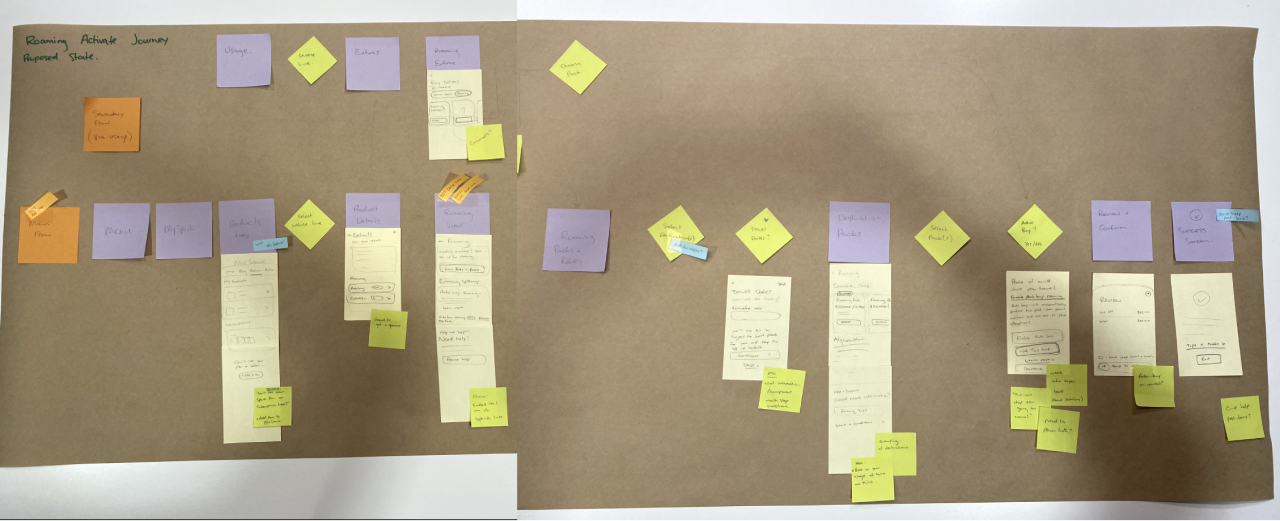
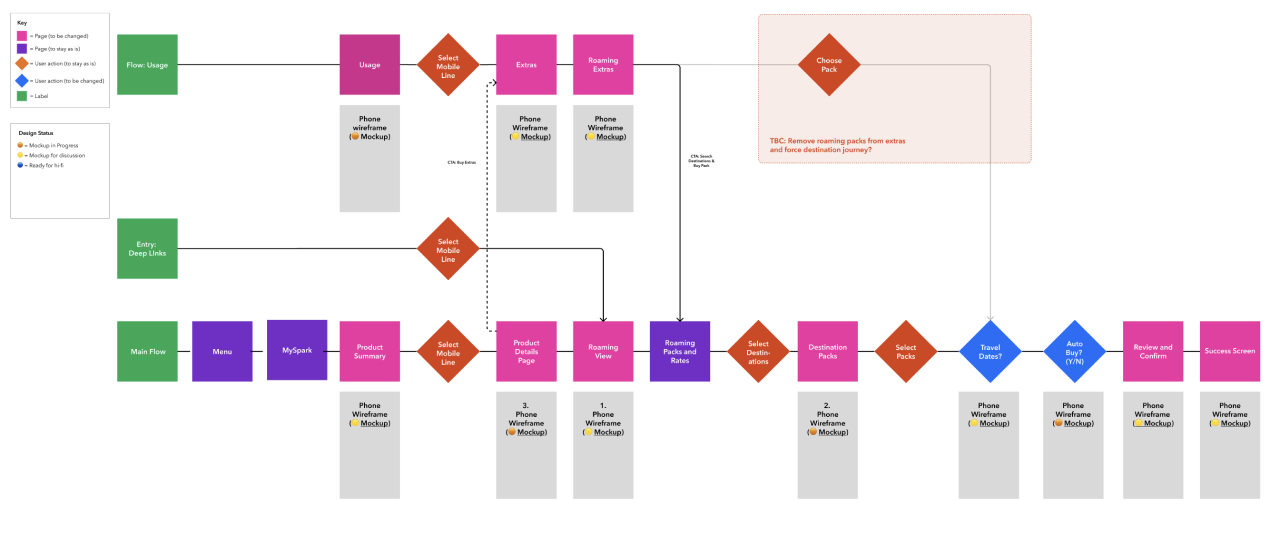
I brought together technical and non-technical members of the squad with stakeholders for a series of ideation sessions. The output of these sessions was a clear user flow that represented the desired state, and a shared understanding of the feasibility to build it.
3. Design solutions
To maximise our impact, while navigating technical complexity, we broke our design solution into smaller ‘drops’ that could be delivered independently:
- Drop 1: Product overview page optimisations
- Drop 2: Consolidate roaming into a central hub
- Drop 3: Surface roaming where and when it’s relevant
Drop 1: Product overview page optimisations
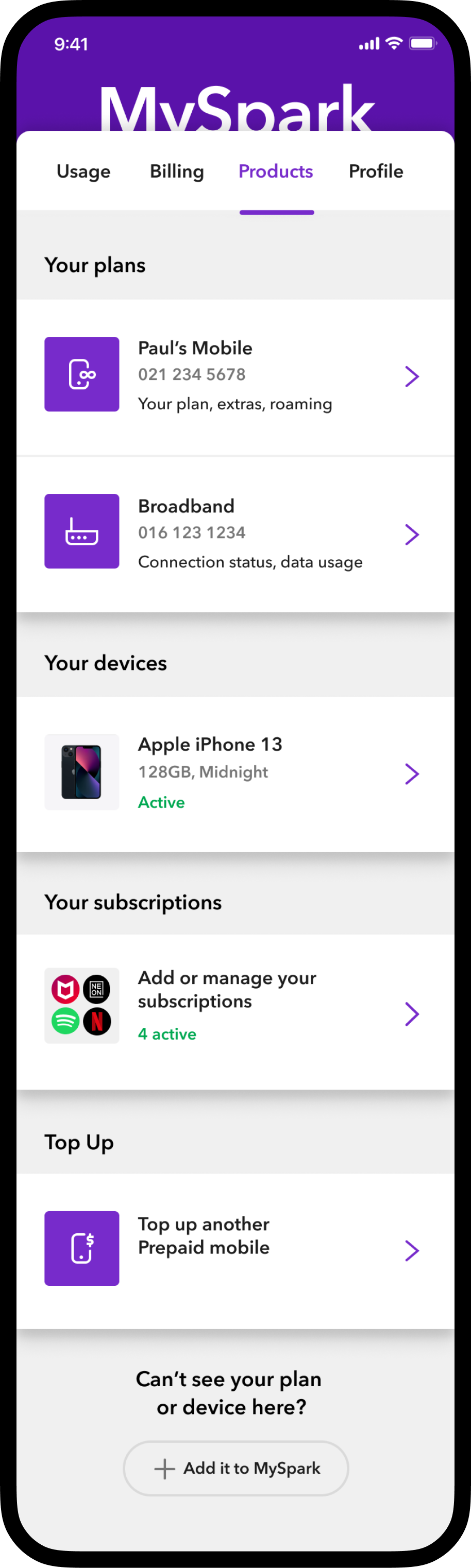
- Redesigned product cards with clear navigation cues (e.g. smaller cards, clear chevrons) and action previews to encourage users to tap through.
- Added recognisable icons to distinguish roaming options from other services.
- Adjusted the visual hierarchy to downplay the “add a product or service” call to action that previously misdirected users.
Impact
- Customer testing showed a significant decrease in accidental taps on non-roaming actions.
Drop 2: Consolidating Roaming into a Centralised ‘Hub’
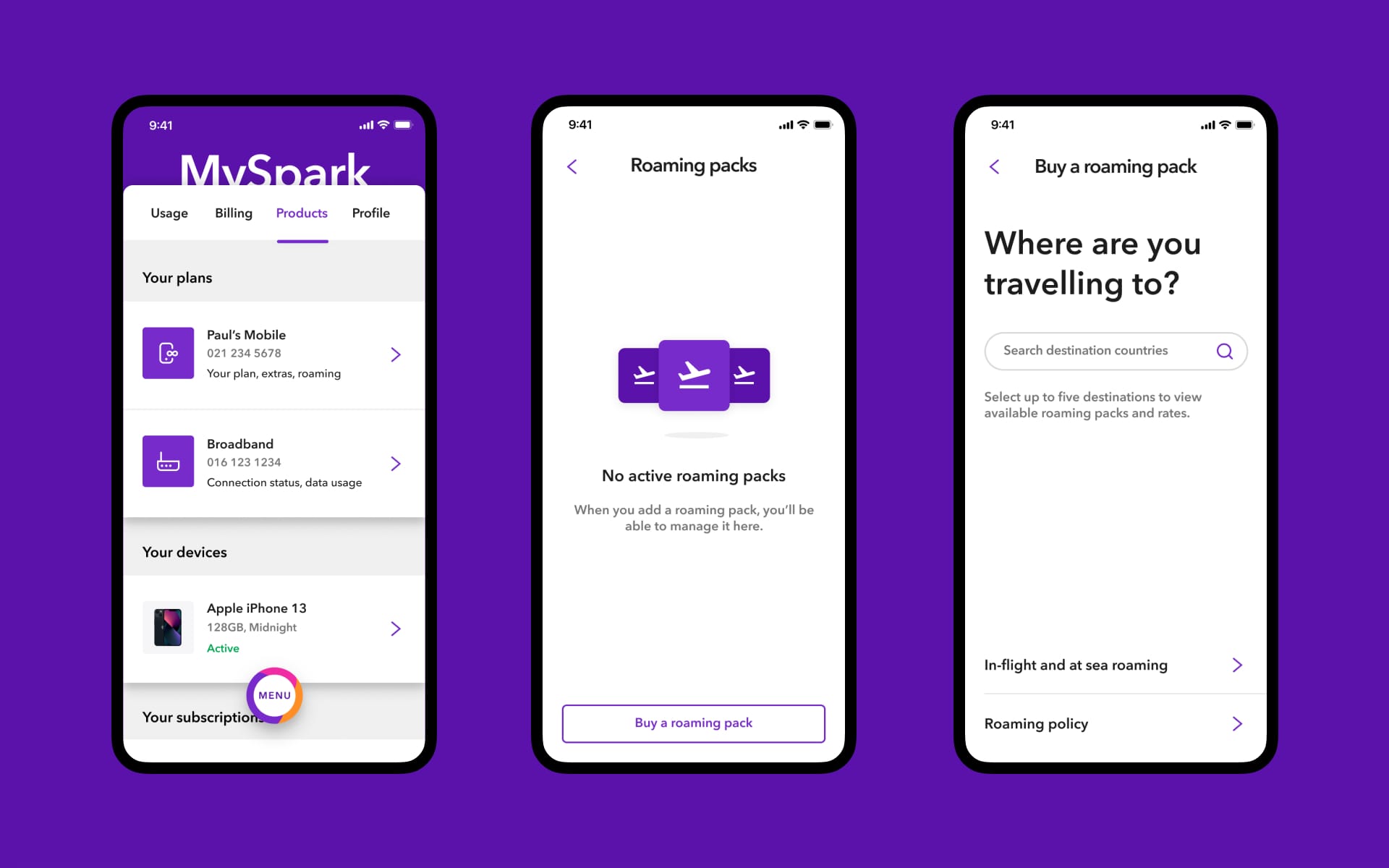
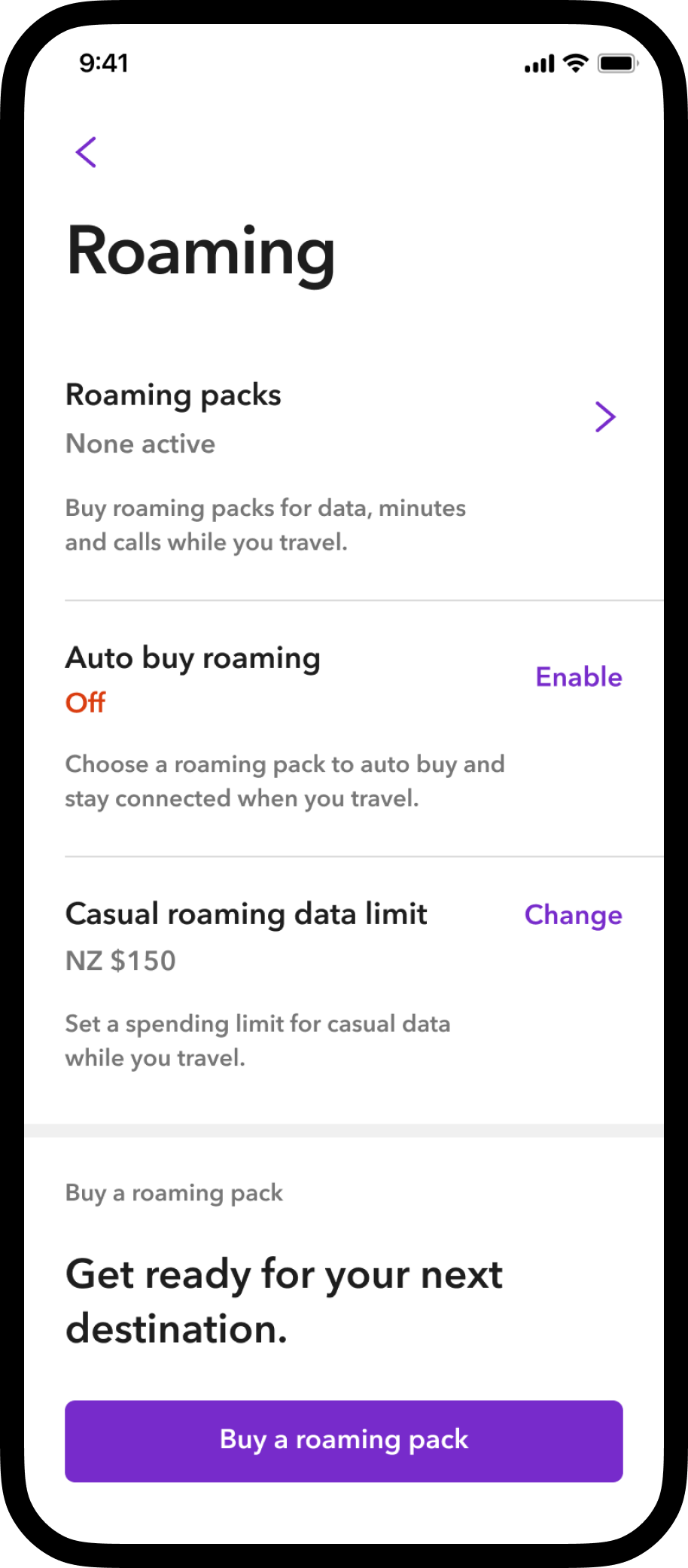
- Developed a centralised roaming hub to consolidate all roaming features in one location, reducing clutter on the product details screen and lowering cognitive load.
Impact
- Customer testing showed a notable increase in successful completions of roaming related tasks.
- This solution enables deep-linking from other parts of the app (dashboards, notifications, contextual banners) to the roaming hub.
Drop 3: Surface roaming where and when it’s relevant
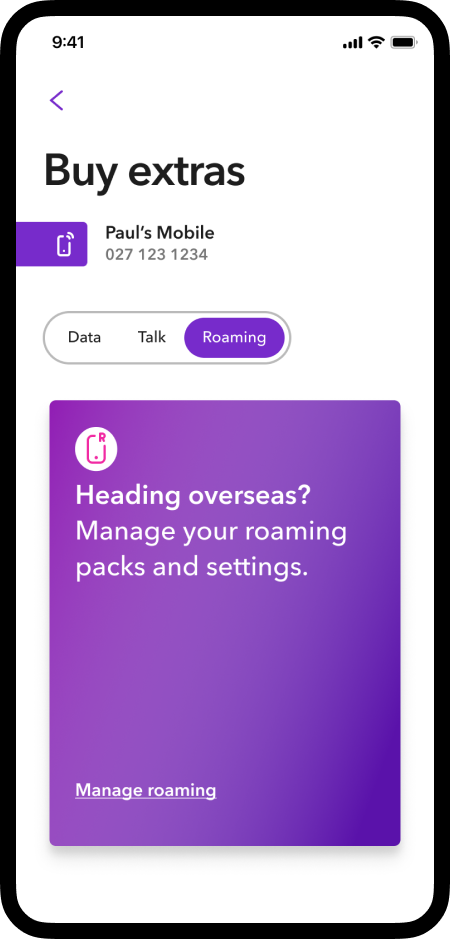
- Integrated roaming options contextually into areas like the “buy extras” screen and introduced empty states when roaming wasn’t yet activated—ensuring that users see relevant options at key moments.
Impact
- Customer testing showed a significant increase in successful task completions for customers who didn’t find roaming via. the product details screen.
Impact
For users
- User testing confirmed a marked reduction in accidental taps and confusion.
- The new design led to increased engagement with roaming plans in customer testing.
- The live optimised screen saw a notable increase in click-throughs to roaming plans and higher traffic on roaming journey screens.
For the business
- Fewer support calls and associated costs.
- Improved utilisation of roaming packs, contributing to better revenue outcomes.
Reflection & next steps
Key learnings
- Breaking down the redesign into iterative “drops” was crucial for managing a complex codebase and organisational constraints which would have made a single, large delivery impossible.
- Research methods like tree testing provided critical insights into diverse customer mental models, highlighting the importance of flexible design solutions.
Future improvements
- Conduct further user testing to refine the roaming pack journey.
- Explore proactive notifications to alert users about roaming options before travel.
- Investigate additional opportunities to streamline the activation process for an even smoother user experience.
This project challenged us to rethink the way roaming features were integrated into the Spark NZ app. By focusing on user insights and iterating quickly, we not only resolved immediate usability issues but also laid the foundation for ongoing improvements.
A balanced approach that combined research, clear design decisions, and pragmatic delivery resulted in a better outcome for customers and the business.